What Local Conditions Do
Most of the houses this company works on went up between 1961 and 2010, with the median landing right around 1981, and the bulk of that stock across the nineteen areas we cover is 1980s and 90s construction. That matters more for openers than people expect. A house built in that window almost always got a chain-drive opener as original equipment, and those units predate battery backup as a standard feature by a couple of decades. So when the power cuts, the opener just stops - no quiet hum of a backup battery picking up the load, because there isn't one.
The climate here is mild temperate, which is actually the one break owners get. In colder inland regions, opener motors and their battery seals take a real beating from freeze-thaw cycles, which shortens the life of any backup battery that is installed. Livermore's weather doesn't stress the hardware that way. The problem in this area isn't the climate wearing out the equipment - it's that the equipment was never built with an outage in mind to begin with.
When Waiting Is Fine
If the power comes back within a few minutes, you don't need to do anything except wait. Nothing about a short outage damages the opener, the springs, or the track. The motor just picks back up where it left off once power returns, and most units don't need to be reset or reprogrammed for a blip that short.
It's also fine to wait if you're not planning to leave the house. A closed garage door with no power is a door that stays closed and locked the way it's supposed to. The only reason to act quickly is if you need the car out - otherwise there's no clock running here, and no reason to force the manual release just because the lights flickered.
What to Look At First
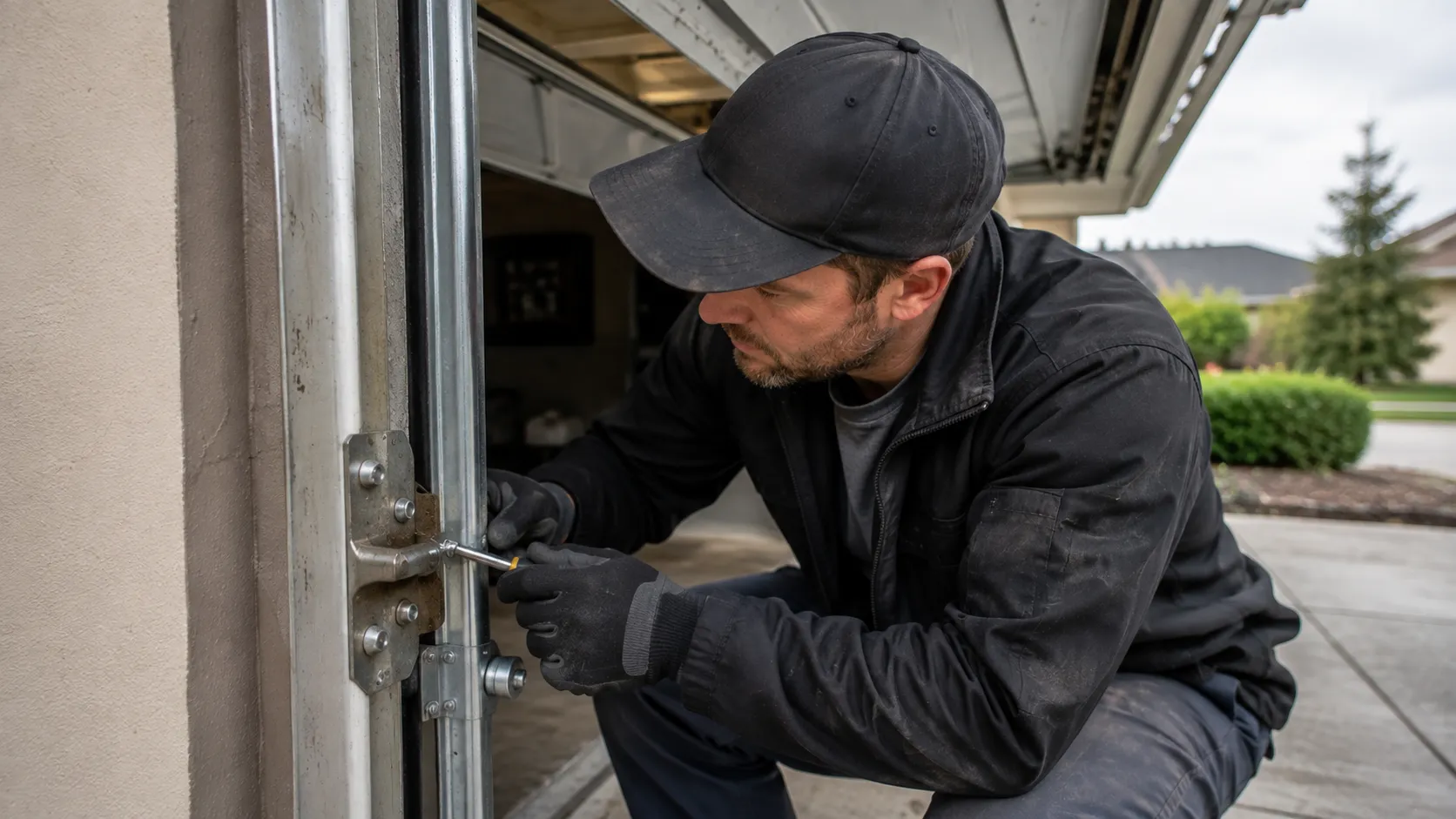
Find the manual release cord - the red handle hanging from a rope near the trolley on the track. Pull it straight down and it disengages the opener carriage from the door itself, which lets you lift the door by hand. On a lot of the original 1980s and 90s openers still in service around here, this cord hasn't been touched in years, so it can be stiff or the handle can be brittle. Check that it moves freely before you actually need it in an outage, not during one.
After you've released it, lift slowly and pay attention to how the door feels in your hands. A door on good springs should feel close to weightless and stay put wherever you stop it. If it feels heavy, drops on its own, or won't stay open, that's a spring problem, not a power problem, and it's worth a call before you run the door manually very many more times.
What Is Going On
The reason this comes up more in older homes than new ones isn't the outage itself - it's what was or wasn't installed when the house was built. Homes from the 1961 to 2010 build window, especially the 80s and 90s cluster that makes up most of the stock in this area, typically got a basic chain-drive opener with no battery backup and a manual release that was expected to be used rarely, if ever.
Across the roughly 148,749 households and 78,437 owner-occupied houses in the areas we serve, that original-equipment pattern repeats a lot. With a median household income of $168,292 in the area, cost isn't usually what's stopping an upgrade - most people just don't know their opener lacks backup until the day the power drops and the door won't budge. A battery backup unit swaps into most existing openers without replacing the whole system. It's a smaller job than people assume, and one worth doing before the next outage rather than during it.
Talk to a local pro
Garage door trouble in Livermore?
Same-day service with honest, upfront quotes.