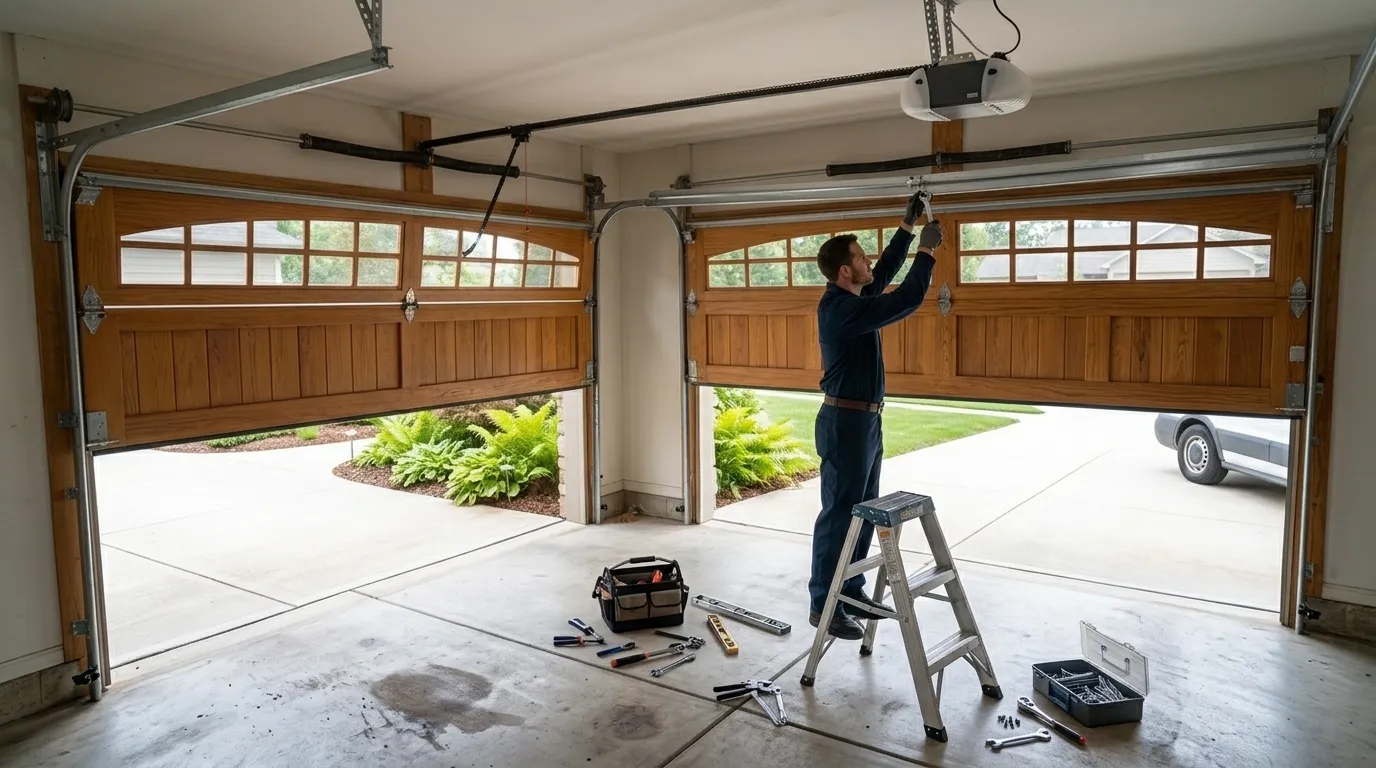
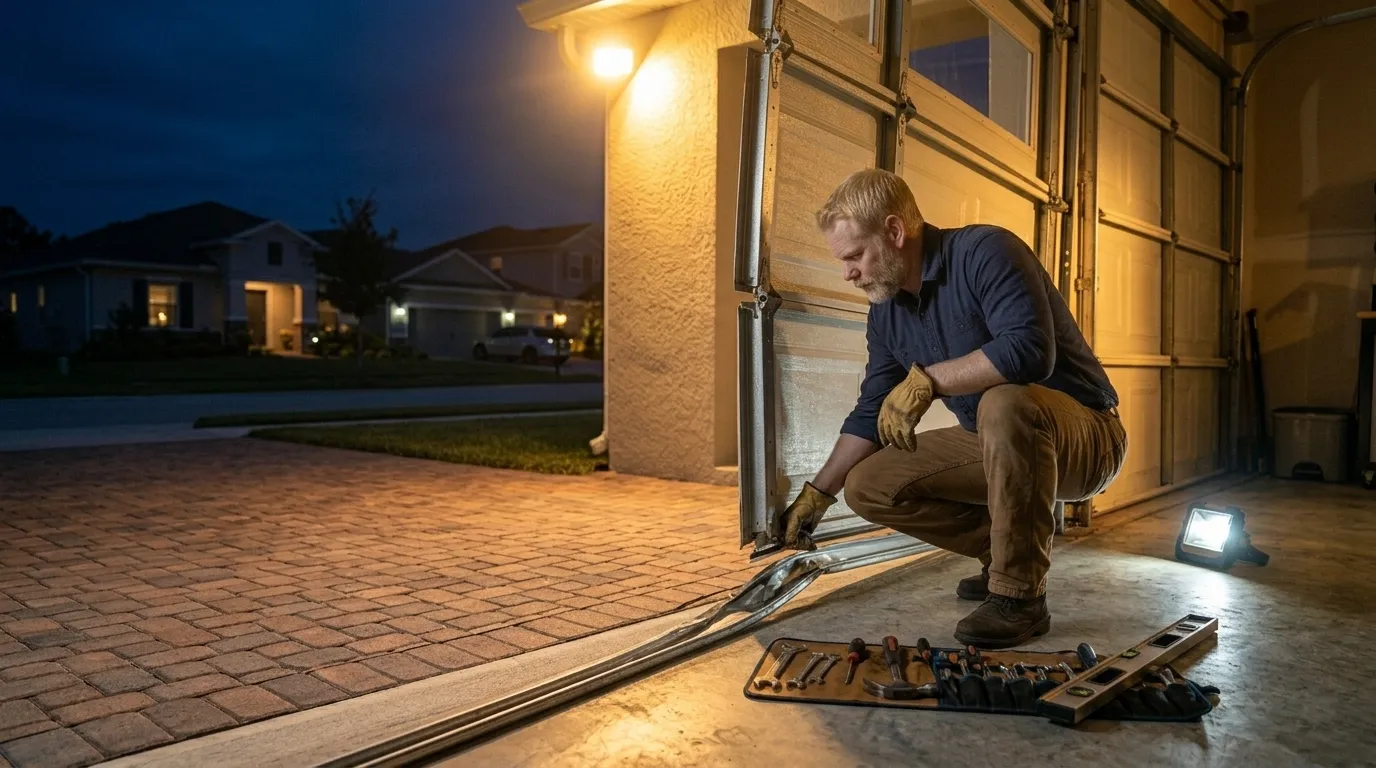
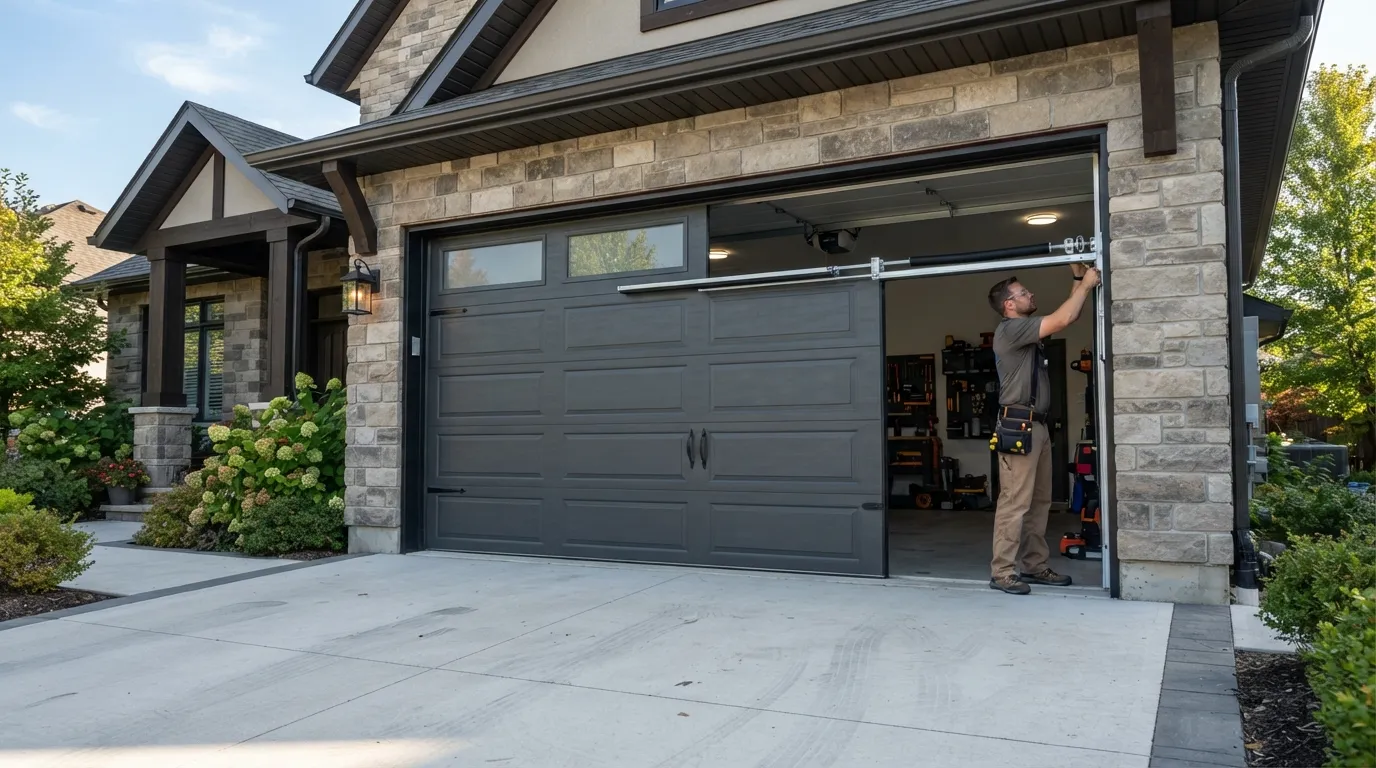
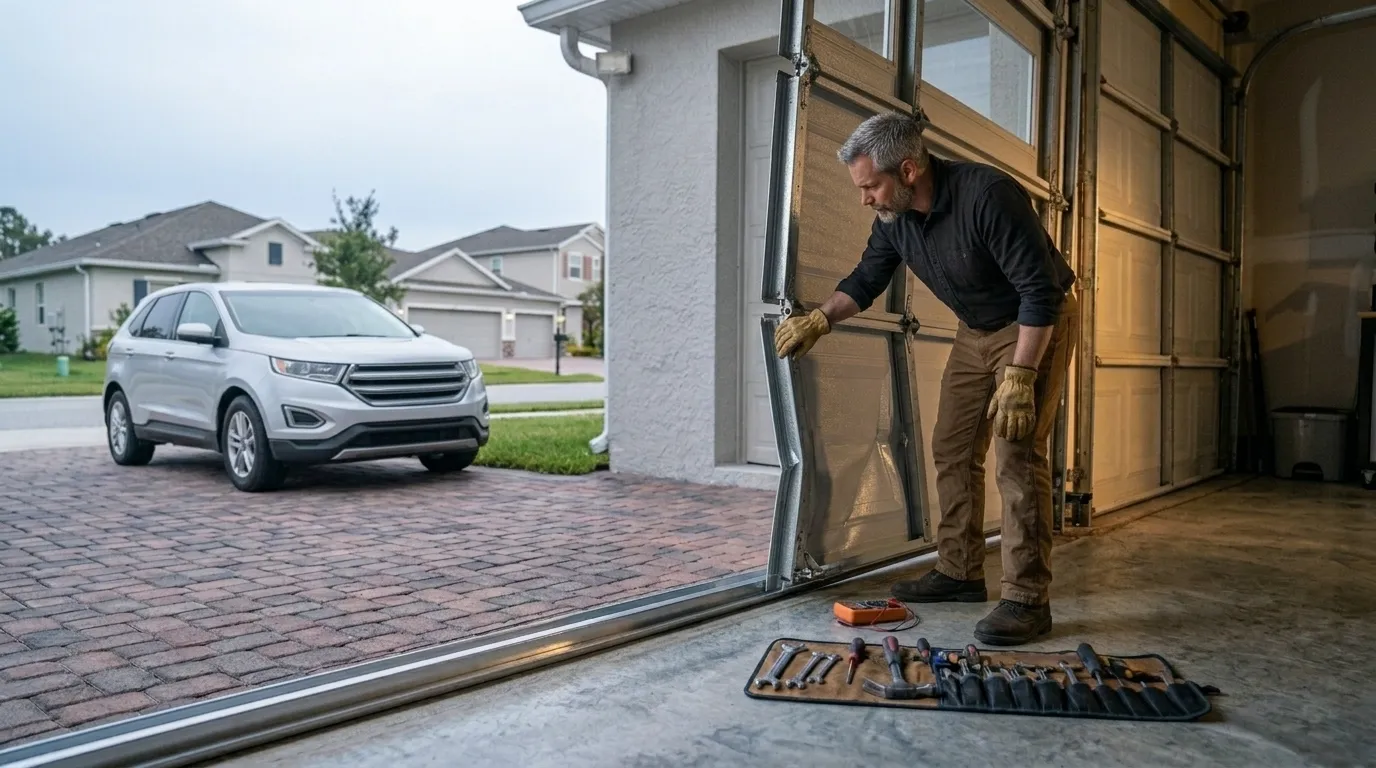
The housing across this service area was mostly built between 1961 and 2010, with the median landing around 1981, and the bulk of it across the nineteen named communities this shop covers dates to the 1980s and 90s. That matters for one reason: torsion springs are rated in cycles, not years, and a door original to a house from that era has usually put in three to four decades of daily openings. Fatigue failure on a spring that age isn't a surprise - it's due.
The mild temperate climate here actually works against an early warning. In a place with hard freezes or big seasonal swings, a garage door gives you creaks, sticking tracks, and slow openers as it struggles through weather extremes - signs you can catch before something snaps. Here, without that stress, a spring can run smooth right up until the moment it lets go all at once, usually mid-cycle, which is why so many of these calls come in as emergencies rather than slow-building complaints.
Openers from that same 1980s-90s building wave are hitting end-of-life on their circuit boards and drive gears around the same years, which is why spring failures and opener failures on original equipment tend to cluster in the same neighborhoods and the same decade of homes.