
Spring-tension heavy-door risk
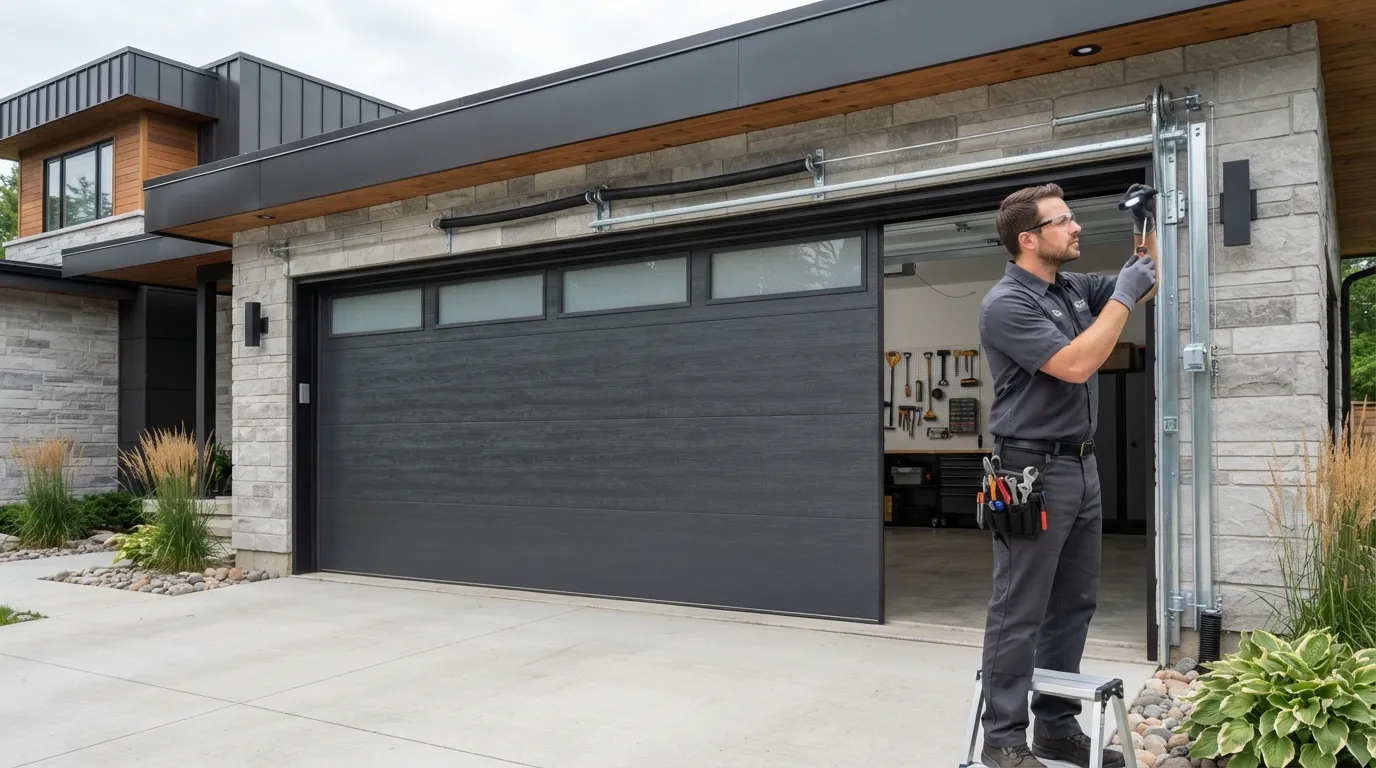
It's not exotic work. Where we'd stop you: if a spring is still under tension, if the door is heavy (double doors especially), or if you can't tell whether the track bent or just shifted.
Discovery Bay, Livermore
Discovery Bay has about 5,494 households and mostly 1990s-built garages. Livermore Garage Door Pros drives the 18 miles out to fix doors that jump the track.
Our process
Discovery Bay is a smaller piece of our service area - about 5,494 households, compared with the roughly 148,749 across the whole territory we cover out of Livermore.
That matters for this job specifically: an off-track door here isn't the volume call it is in some of the bigger pockets we serve, so when we do get one, it's worth looking closely at why.
Most houses in Discovery Bay were built around 1995, noticeably newer than the 1981 median across the wider service area. That means steel roll-up doors on nylon rollers more often than the older wood-panel doors on steel rollers we still find closer to Livermore.
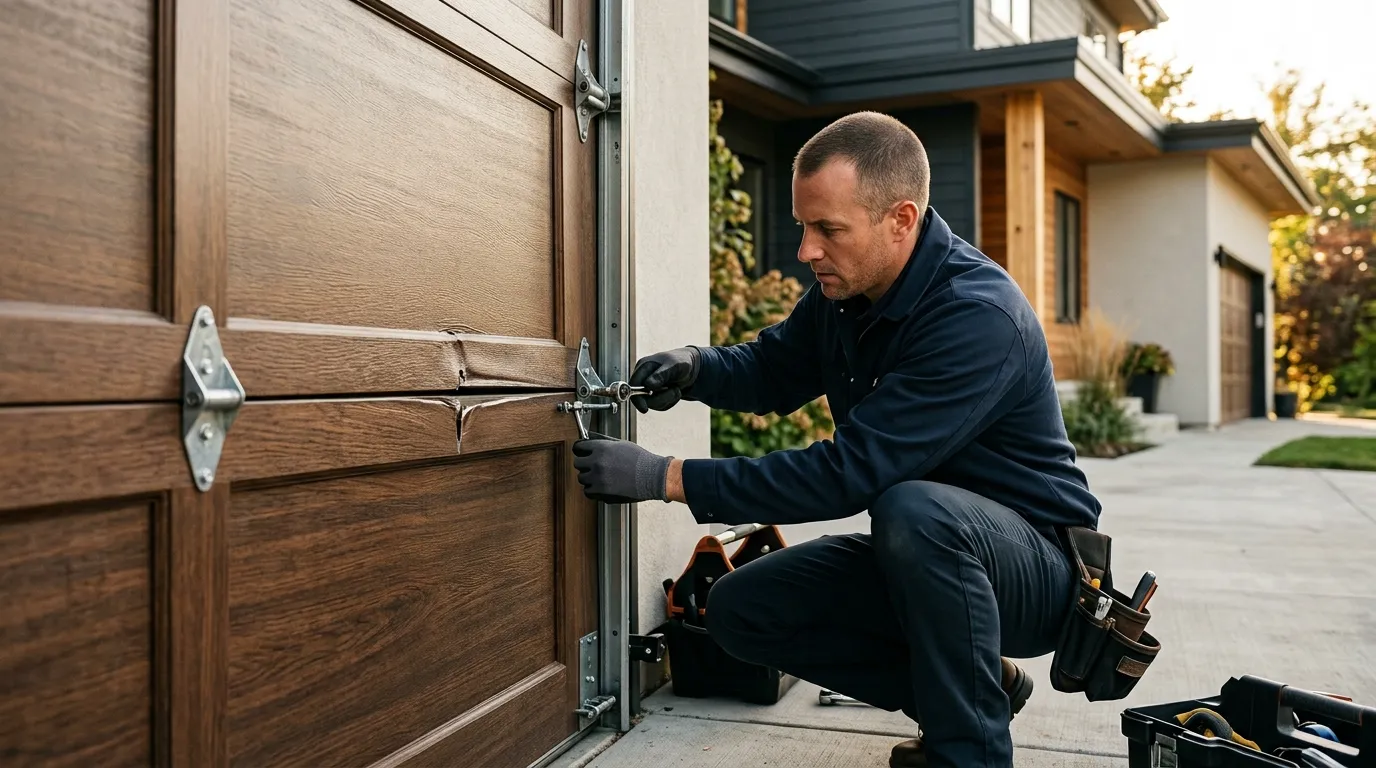
The fix is usually the same either way: back the door off the opener, check whether the track bent or the bracket pulled loose from the jamb, straighten or swap the section, reset the rollers in the track, and run it by hand before we ever touch the opener again.
If a hinge is bent along with the track, we replace the hinge - bending it back just moves the problem down the door. We don't stock every roller and bracket size on the truck for every door era, so if the door takes an odd part, we may need to order it and come back rather than finish in one visit. That's the honest version, not the version that sounds better.
Timing
It's an 18-mile drive out from Livermore, so we plan a Discovery Bay call as one stop, not a five-minute turnaround. Once we're on site, most off-track jobs where the track is only knocked loose - not bent - run under an hour: reseat the rollers, check the track alignment against the jamb, tighten the brackets, test the door under power a few times.
If the track itself is bent, that adds time, because a bent section usually gets replaced rather than hammered straight. A track that's been forced back into rough shape will just come off again the first time the cable runs uneven. We'd rather tell you it needs a new section than send you off with a door that fails again in a month.
Because of the distance, we try to have the right hardware guessed and loaded before we leave Livermore based on what you tell us on the phone - door age, whether it's one panel or several jumping the track, whether the opener still runs. That's guesswork until we're standing in front of it, but it's better guesswork with a photo than none.
DIY or pro
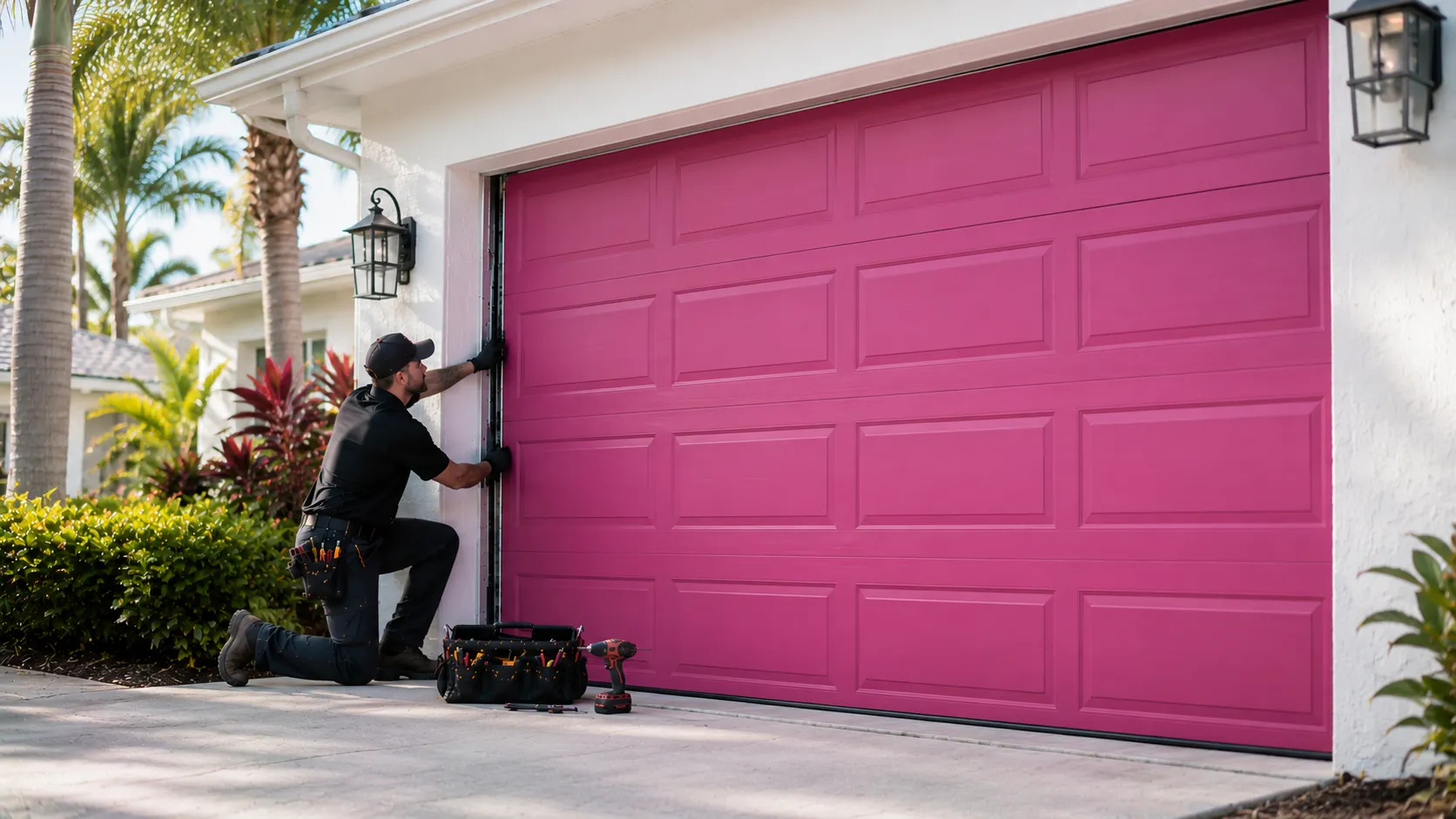
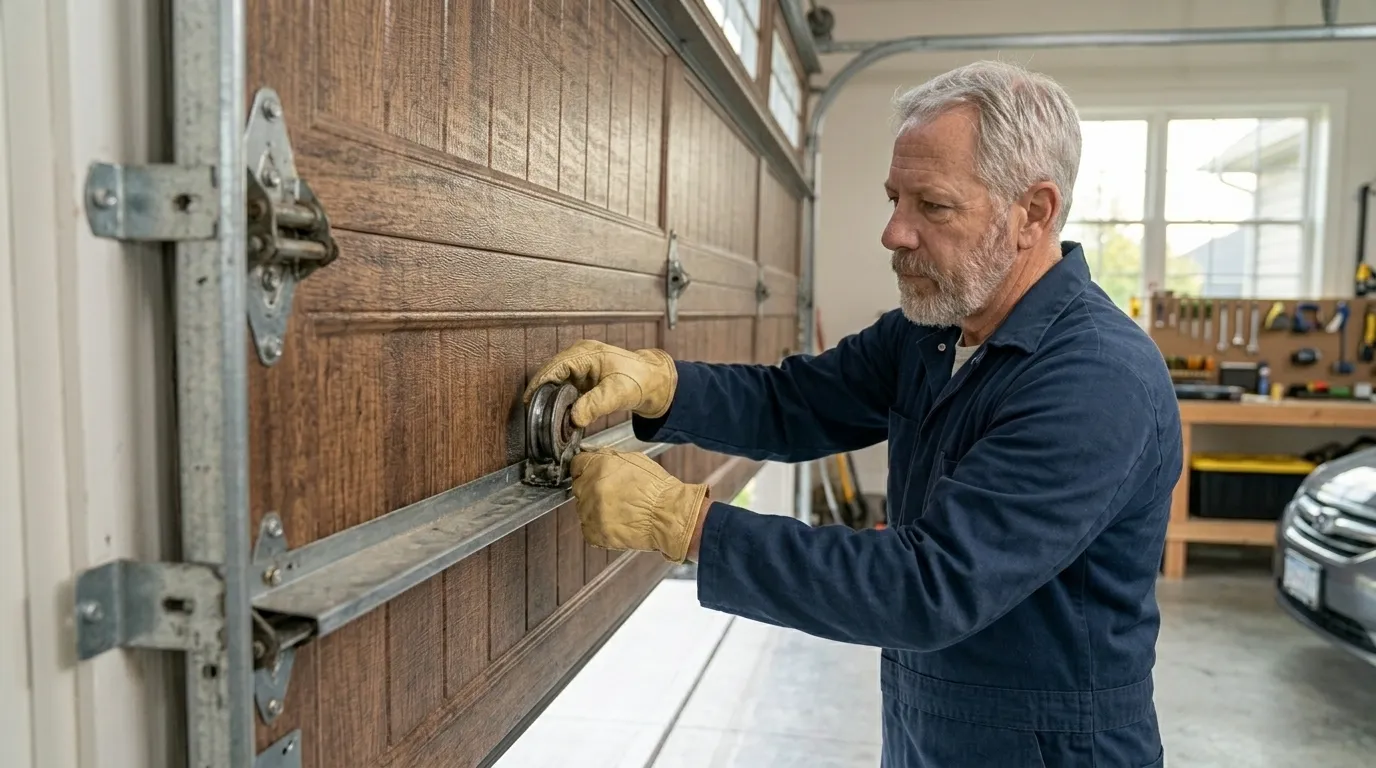
If the door came off the track on just one side and the panel isn't bent, some owners do get it back on themselves - loosen the track bracket, gently work the roller back into the channel, retighten.
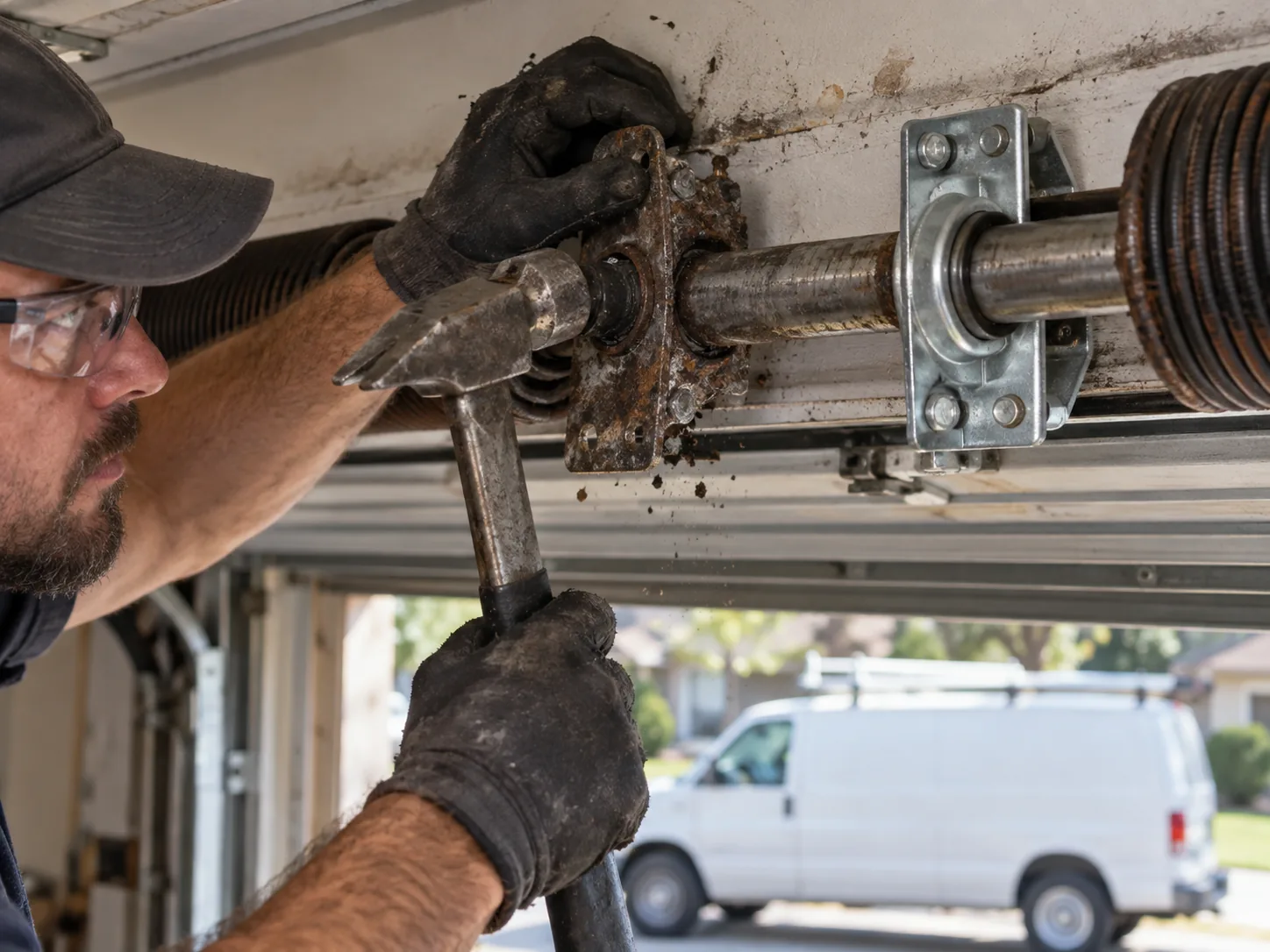
It's not exotic work. Where we'd stop you: if a spring is still under tension, if the door is heavy (double doors especially), or if you can't tell whether the track bent or just shifted.
A torsion spring holding a loaded door is not something to guess around, and a door that drops while you're under it doesn't give you a second try. If the opener forced the door against a stuck track before it tripped the sensor, there may be more damage than the track alone - check the panel seams too.
Given that houses here run newer, around 1995, the steel track and roller setups are usually straightforward compared to older gear, which is part of why a careful owner can sometimes handle the simple version of this. If you're not sure which version you have, that's the call worth making before you touch it.
Warning signs
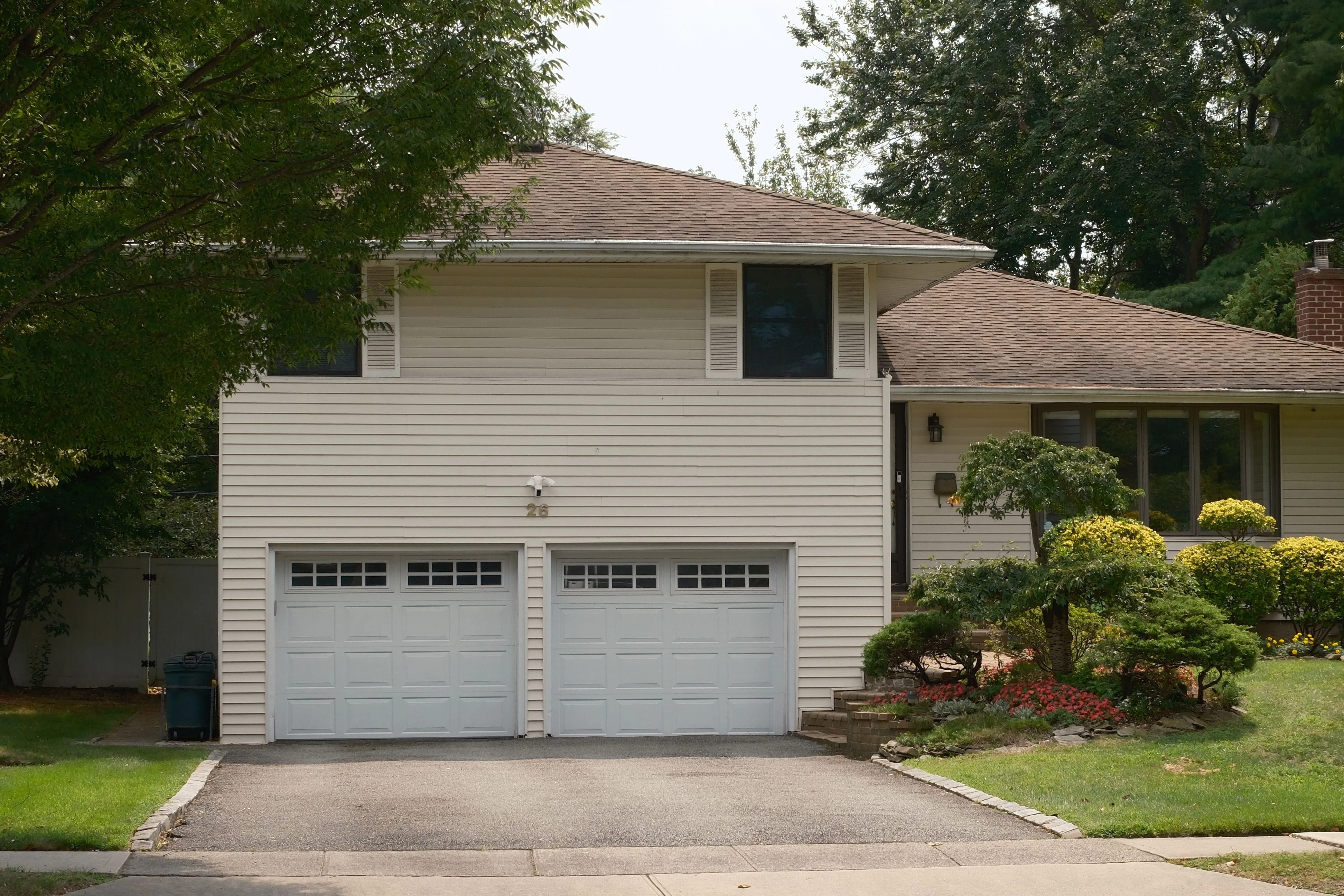
The usual signs: the door hangs crooked in the opening, one bottom corner sits lower than the other, or the door stopped a few inches up and won't go further without grinding. Sometimes you'll hear the roller pop before you see anything - a distinct clunk as it jumps the channel.
In Discovery Bay's mild temperate climate, we don't see the ice-and-thaw track distortion that shows up in harsher-winter regions, so when a track's out of alignment here it's more often a loose bracket, a bump from a car or bike, or years of a slightly misaligned roller finally working itself out of the channel. Newer doors built to the 1990s-era stock common here tend to have track hardware that's held up well, but the brackets anchoring the track to the framing can still work loose over two or three decades.
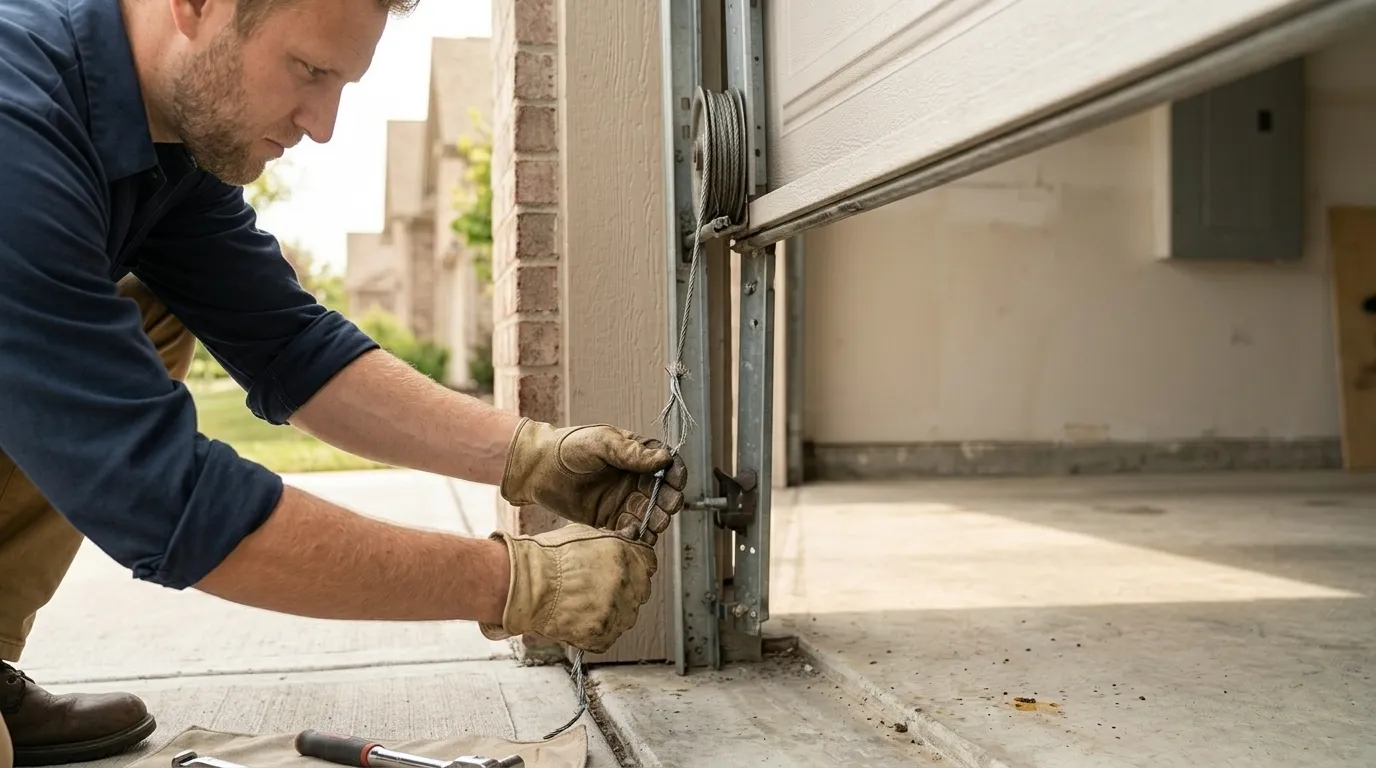
If you see the cable looking slack or frayed near the bottom bracket at the same time, don't run the opener again - call it in instead. That combination usually means more than a simple off-track repair.
Questions
No. We run out of Livermore and drive the 18 miles out for calls in Discovery Bay. It doesn't change the repair, but it does mean we plan the trip rather than treating it as a quick add-on stop.
Usually it's a bracket that's worked loose over time, or a roller that's been running slightly misaligned for years and finally jumped. In a town where most houses date to around 1995, the hardware is often original, and thirty years is enough for a bracket to loosen.
If it's a light bend, sometimes. But we usually replace a bent section rather than bending it back - a straightened track tends to fail again once the door runs on it a few more times, and that's not a fix we're willing to sell you as permanent.
Explore more
Ready when you are
Livermore Garage Door Pros repairs and installs garage doors, springs and openers in Livermore, CA and the surrounding area.