
Guide
What That Sound From Your Garage Door Is Telling You
Livermore homes built mostly in the 1980s and 90s are hitting the age where springs, rollers, and openers start talking back. Here's what each sound means.
Local detail
What Local Conditions Do
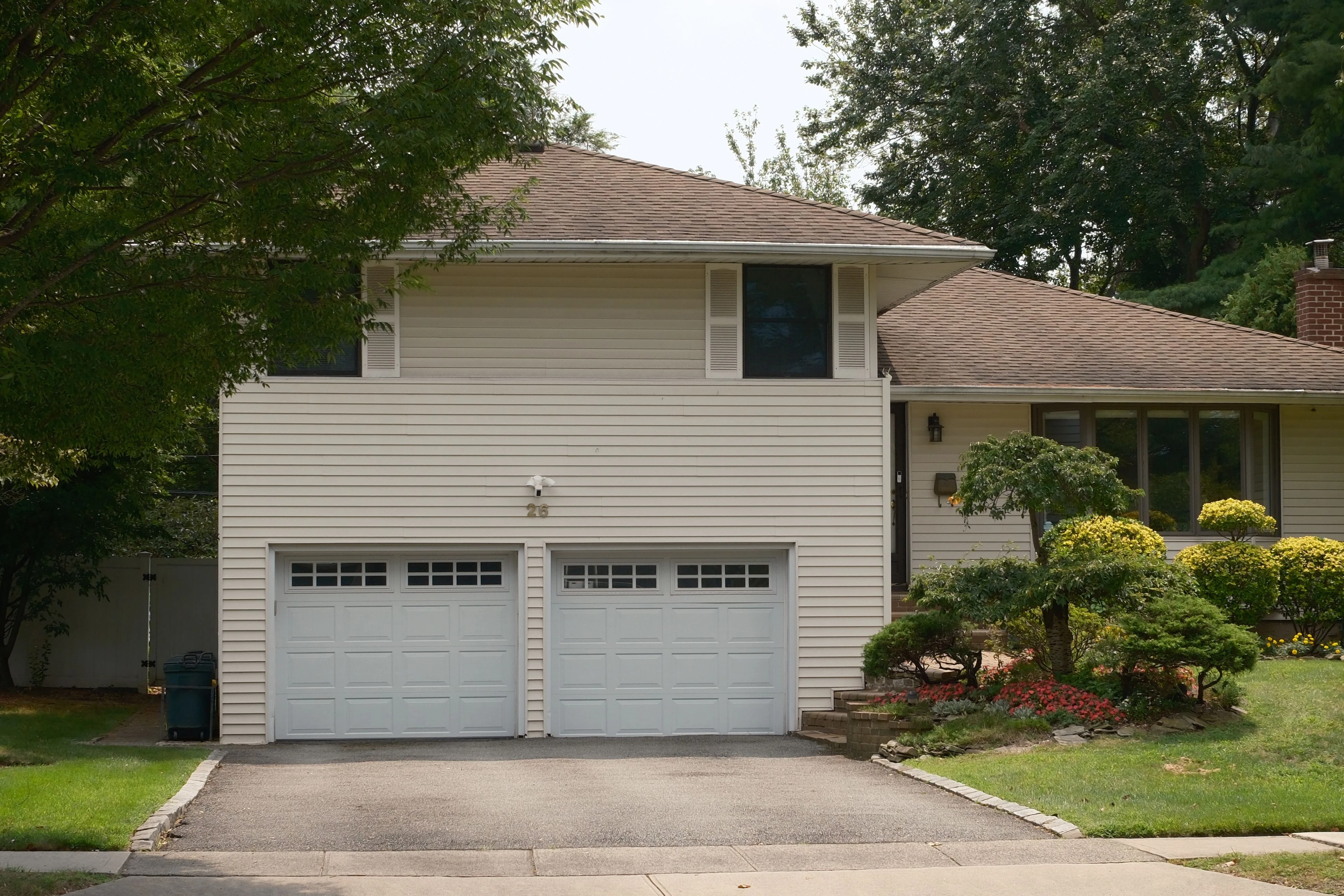
Across the areas we work - Livermore itself and the stretch out toward Sunol, Camino Tassajara, and Blackhawk - most houses went up between 1961 and 2010, with the bulk of that stock landing right around 1981. That number matters more than people think. A door and opener installed when a tract went in during the early 1980s is closing in on 45 years of daily use, and springs, rollers, and drums don't last that long even when nothing's wrong.
The climate here plays a smaller role than the age of the hardware does. This is a mild temperate band - you don't get the hard freeze-thaw cycles that snap a spring overnight or swell a wood jamb shut. What you do get is steady wear: dust and heat cycling through the same rollers and bearings for decades without the kind of cold-weather failure that forces a replacement early. That's actually why so many Livermore doors run on original 1980s and 90s hardware well past the point where the parts are quiet. Nothing forced the owner's hand, so nothing got replaced, and now the noise is doing the talking instead.
The area
When Waiting Is Fine
Not every sound needs a call today. A single sharp pop when the door first opens on a cold morning, followed by smooth operation the rest of the day, is usually just metal settling - common on the older torsion setups still running in houses built through the 1980s and 90s. If it happens once and the door tracks straight and closes flush, you can watch it for a week or two before doing anything.
Here's the honest limit on that advice: we can't tell you over the phone whether a noise is cosmetic or the start of a spring failure. A cable that's fraying sounds almost identical to a roller that just needs grease, right up until the cable lets go. If the noise is new, getting louder, or paired with the door hesitating partway through its travel, that's not a wait-and-see case anymore. Springs in particular don't degrade gracefully - they hold tension until they don't, and a full snap under load is a bad way to find out you waited too long.
What we find
What to Look At First
Before you call anyone, watch the door run one full cycle and note where the noise happens. A grinding sound near the top of the travel usually points to the rollers or the horizontal track, especially in houses from the 1980s and 90s stock still running steel rollers instead of nylon. A rhythmic thump on every rotation is almost always a roller with a flat spot or a bearing that's gone dry.
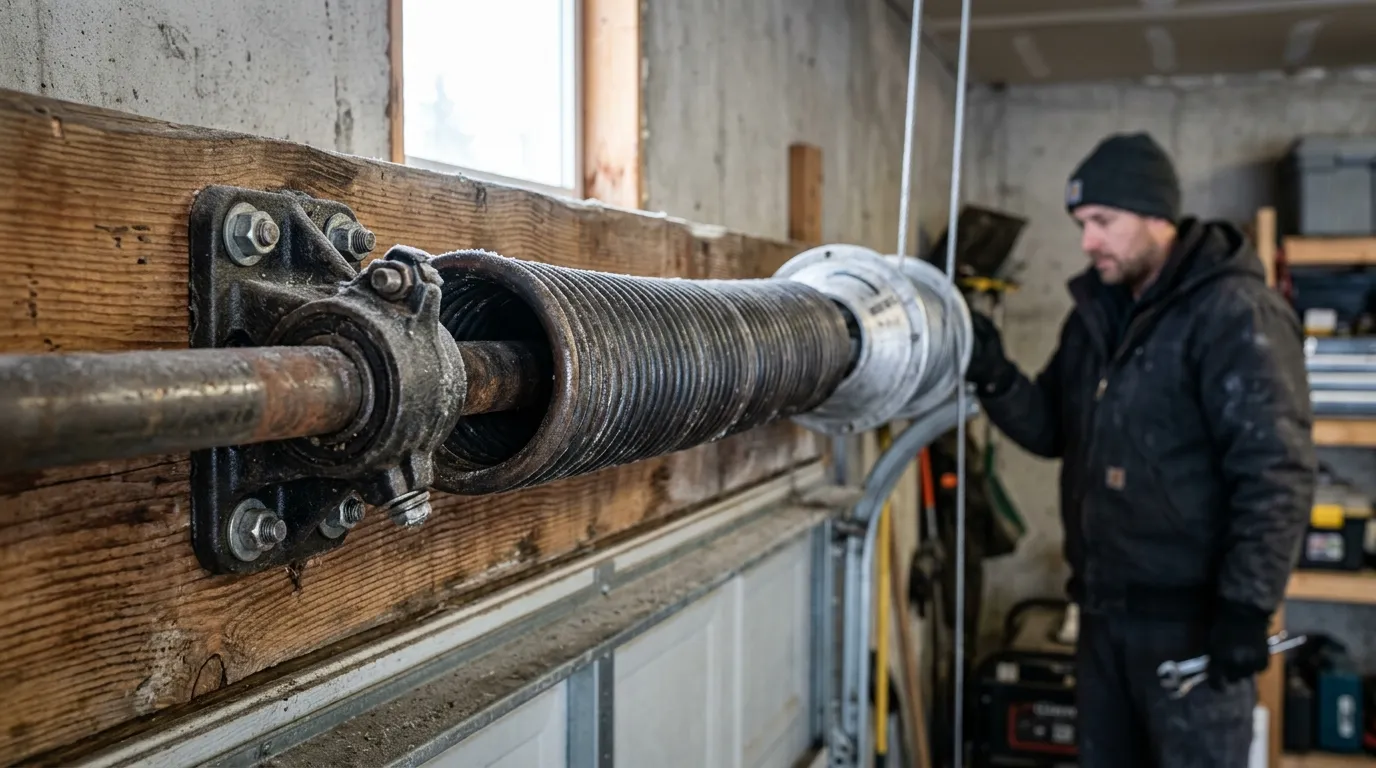
Check the springs next, but only by looking, never by hand - a torsion spring under tension is not something to touch. If you see a visible gap in the coil or rust concentrated at one spot on an original spring from a house built in the median-1981 range, that's your answer, and it's not a lubrication fix.
Last, listen at the opener itself. A whine that rises and falls with the door's speed often means the drive gear inside the unit is worn, which is common once an opener has logged this many years of cycles across the 1980s and 90s builds common in this service area.
How we work
What Is Going On
Most of the noise complaints we hear break down into three causes, and the age of the housing stock across this service area explains why they cluster together. Steel rollers on original hardware from the 1980s and 90s wear down and start knocking against the track - that's the rattling, clattering sound on the way up or down. Torsion springs from the same era lose tension slowly, which shows up as a grinding or straining sound right as the opener takes the load, since the motor is compensating for a spring that isn't pulling its share anymore.
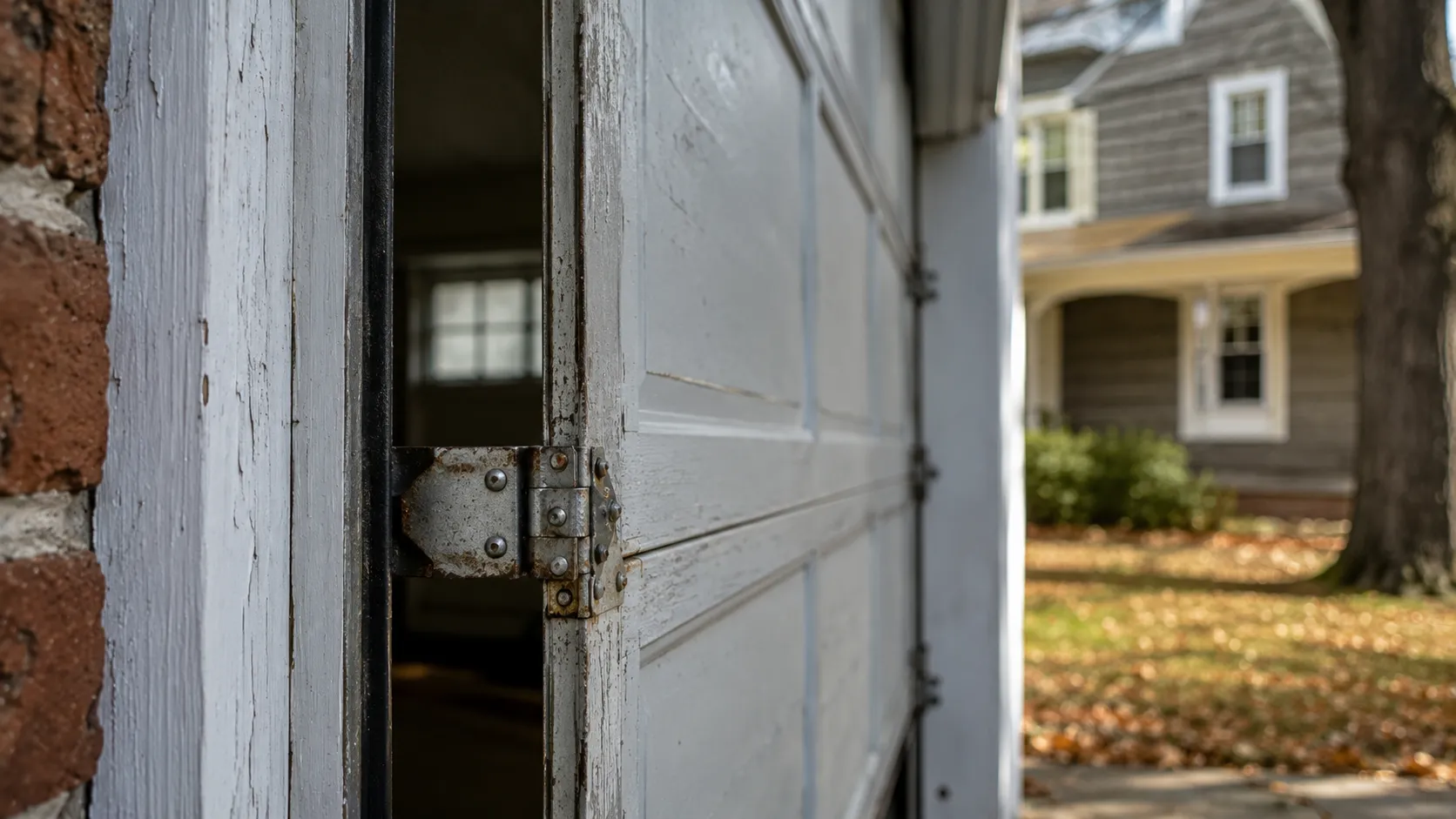
The third is the track itself pulling loose from the jamb, more common in houses old enough that the original mounting hardware has worked loose over decades of the door's own vibration. None of these three are climate-driven here - this is a mild band, so we're not chasing the cold-snap failures other regions deal with. It's straightforwardly a function of how long a lot of these doors have been running the same original parts since the neighborhood went in.
Questions
Common questions
My garage door makes a loud bang once in a while but works fine otherwise. Should I worry?
A single settling pop, especially in the morning, usually isn't urgent on its own. But on hardware this old - a lot of Livermore's stock dates to the 1980s and 90s - it's worth a look rather than a shrug, because the same age that causes harmless settling also causes the springs that fail without warning.
Is the grinding sound from my opener or my springs?
Listen for when it happens. If the grind starts right as the opener takes the door's weight and eases once the door's moving, that's usually a spring losing tension, common on original hardware from houses built through the 1980s and 90s. A steady grind through the whole cycle points more toward the opener's drive gear.
Does Livermore's weather cause garage door problems?
Less than people expect. This is a mild temperate climate, so we don't see the freeze-thaw spring snaps or swollen wood jambs that colder regions deal with. Most of what we hear is straightforward mechanical wear from age, not weather.
How old does a garage door have to be before the noise is a real concern?
There's no fixed number, but a lot of homes in this service area were built around 1981, which puts plenty of original doors and openers at 40-plus years of use. At that age, a new or worsening noise deserves a look rather than a wait, even if the door still opens and closes normally.
Ready when you are
Need a garage door sorted in Livermore?
Livermore Garage Door Pros repairs and installs garage doors, springs and openers in Livermore, CA and the surrounding area.