
Guide
What Actually Happens During a Livermore Service Call
A look at what a Livermore garage door service call actually checks, from 1980s-era torsion springs to weather seals suited to our mild temperate climate.
Local detail
What Local Conditions Do
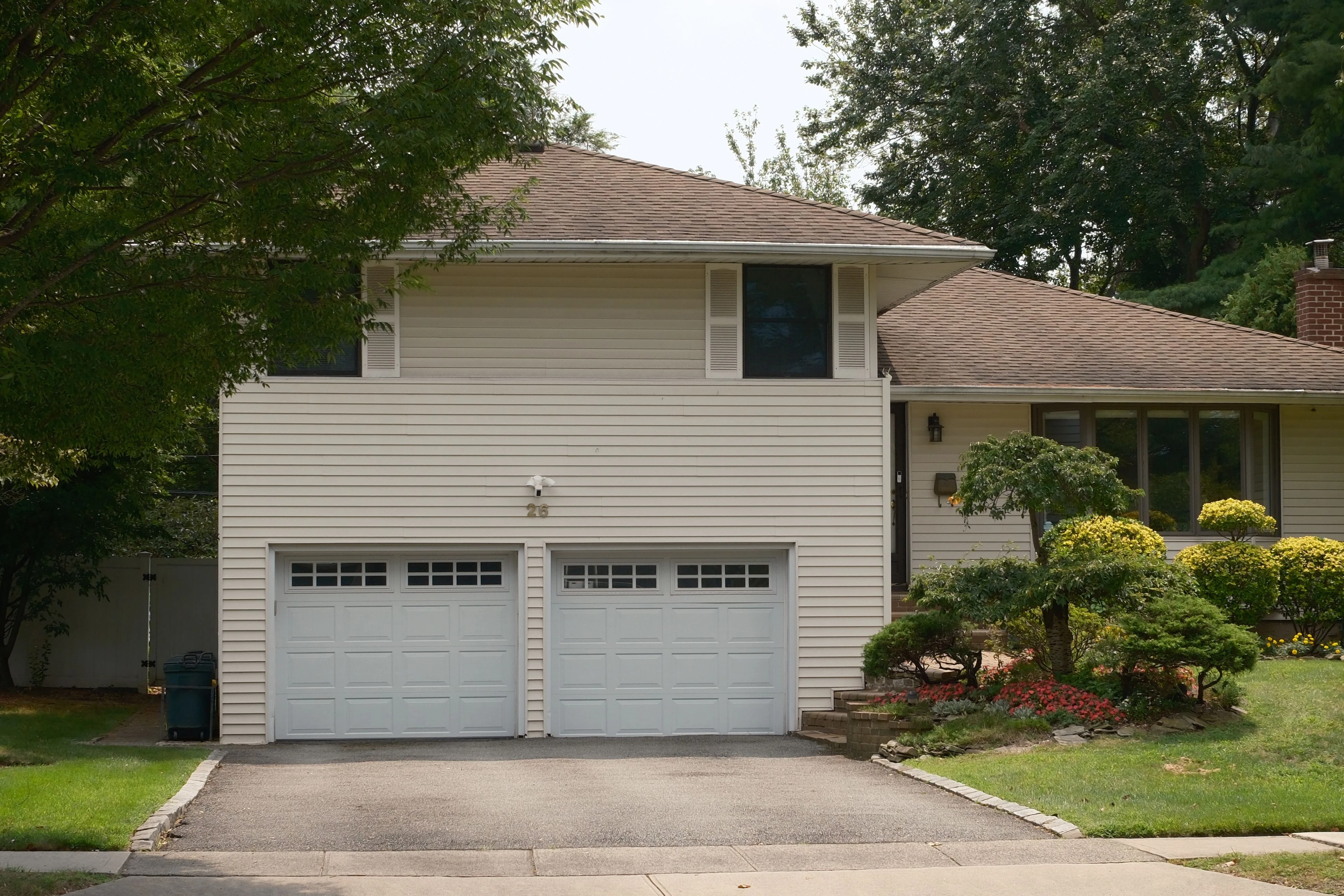
Most of the houses we get called to sit on stock built between 1961 and 2010, with the bulk of it going up in the 1980s and 90s. That matters because doors and openers from that era were built to a different spec than what's sold today - lighter gauge track, single-wire safety sensors on the earliest chain-drive openers, and torsion springs sized for the door weight of that period, not the heavier insulated steel doors a lot of owners have swapped in since. Our climate here is mild temperate, so we don't see the ice-jammed tracks or the swollen wood panels that garages in harsher regions deal with.
What we do see is UV and heat cycling on nylon rollers and rubber weatherstripping - slow, steady breakdown rather than sudden failure. A service call in a house built in 1981, which is roughly the median age of stock across our area, usually means checking whether the hardware is original or has been partly upgraded, because a lot of these garages have a mix of both. That mismatch - new opener, original springs, for instance - is one of the more common things we find and it changes what the repair actually is.
The area
When Waiting Is Fine
Not every noise or stiff spot needs a same-week call. A door that's a little loud on a cold morning and quiets down by afternoon is normal wear on aging rollers, not an emergency - our mild temperate winters don't put the kind of stress on hardware that freeze-thaw regions see, so a squeak rarely turns into a sudden break overnight here. If the door still opens and closes evenly, tracks in, and the opener reverses properly when it hits something, you can generally wait and get it looked at during a regular visit rather than an urgent one.
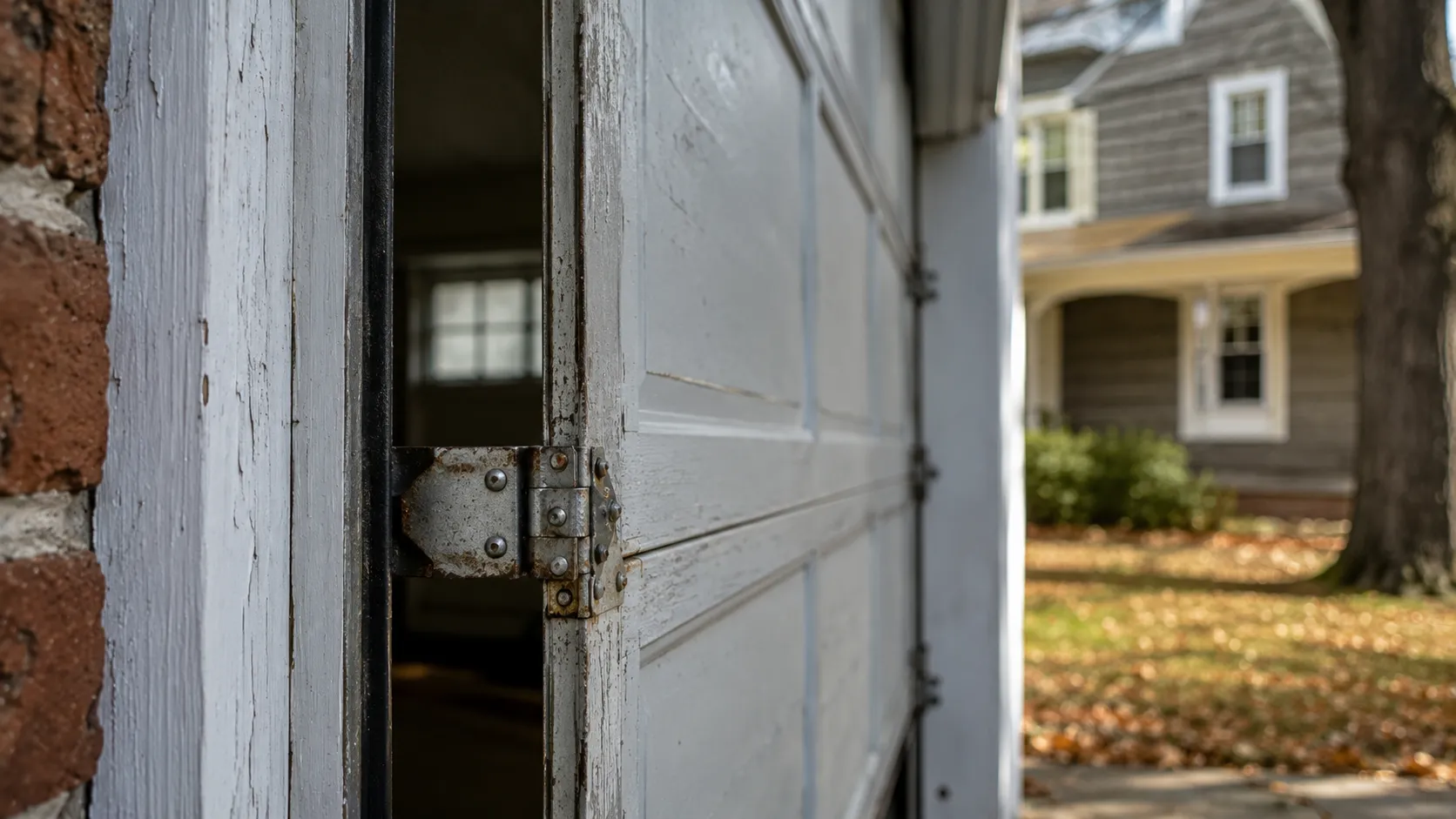
Where we tell people to wait: cosmetic dents that don't affect the track, a slightly slow opener that still completes the cycle, or a panel color mismatch after a partial repair. Where we don't: a spring that's visibly separated, a door that drops instead of lowering smoothly, or cables that look frayed. Given how much of the housing stock here dates to the 1980s and 90s, a lot of the 'wait and see' calls turn out to be original hardware simply reaching the end of a long service life rather than something broken.
What we find
What to Look At First
Before anything else, we look at the springs, because on a 1980s or 90s build that's the part most likely to be original. Torsion springs from that era were typically sized for a lighter door, so if the door's been replaced with a heavier insulated one since, the springs are often already overworked. Next is the opener - if it's a chain-drive unit that matches the age of the house, the sensors may predate today's safety-eye standards, which is worth flagging even if nothing's failed yet.
We also check the weatherstripping at the bottom panel and sides; in a mild temperate climate like ours it degrades from sun exposure more than cold, so it dries and cracks rather than freezing. Rollers get a look too - nylon rollers from an older install often show grooving or flat spots after decades of cycling. One honest limitation: if the track itself is bent or the door is an older wood panel style, we may tell you replacement makes more sense than another repair, since parts for some of the older setups are getting harder to source and a patched fix won't hold as long as a full swap.
How we work
What Is Going On
Across the households we serve - roughly 148,749, with about 78,437 of those owner-occupied houses - the pattern repeats: original 1980s or 90s hardware, sometimes with a newer opener bolted onto old track, sometimes with the reverse. A service call is really about figuring out which parts are original, which have been touched, and whether they're still compatible with each other. Higher household incomes in this area, median around $168,292, mean more owners choose full replacement over patchwork repair once a door hits a certain age, which is a fair call when the springs, rollers, and opener are all original and all wearing out around the same time.
Our mild climate means we're rarely chasing weather damage - it's almost always simple fatigue from decades of daily cycling. If you want more on how we handle a visit, see /.
Questions
Common questions
How old is the hardware likely to be on my garage door?
If your house was built in the 1980s or 90s, which covers most of the stock in this area, there's a good chance at least the springs or track are original. Median build year across the area is around 1981, so a lot of what we find is original-era hardware that's simply reached the end of its service life.
Does Livermore's climate cause specific garage door problems?
Our climate is mild temperate, so we don't deal with the freeze-related failures some regions see. The more common issue here is UV and heat cycling breaking down weatherstripping and nylon rollers gradually over years, rather than a sudden cold-snap failure.
Can a service call always fix an old door instead of replacing it?
Not always. If the track is bent or the door is an older style where parts are hard to source, we'll say so rather than patch something that won't hold. On some 1980s and 90s builds, replacement ends up being the more honest recommendation.
Ready when you are
Need a garage door sorted in Livermore?
Livermore Garage Door Pros repairs and installs garage doors, springs and openers in Livermore, CA and the surrounding area.