
Guide
Cold Mornings and Older Springs in Livermore
Why a torsion spring on a Livermore house built between 1961 and 2010 is more likely to let go on a cold morning, and what to check before you call for a repair.
Local detail
What Local Conditions Do
Livermore sits in a mild temperate band, not a place that sees hard freezes for weeks at a stretch. But mild doesn't mean flat. Overnight temperatures still drop enough on clear winter mornings to stiffen the steel in a torsion spring, and that swing matters more here because so much of the housing stock is old enough for the springs to already be near the end of their working life.
Most houses in the service area went up between 1961 and 2010, with the bulk of that build-out concentrated in the 1980s and 90s across the nineteen named areas we work in. A spring installed when a house was built in, say, 1984 has had four decades of cycling. Cold metal is less forgiving of that fatigue - it doesn't flex as easily on the first pull of the day, and a spring that's already down to its last few thousand cycles is the one that snaps on a 40-degree morning instead of a 65-degree afternoon.
This isn't a climate emergency. It's an aging-hardware problem that a mild cold snap exposes.
The area
When Waiting Is Fine
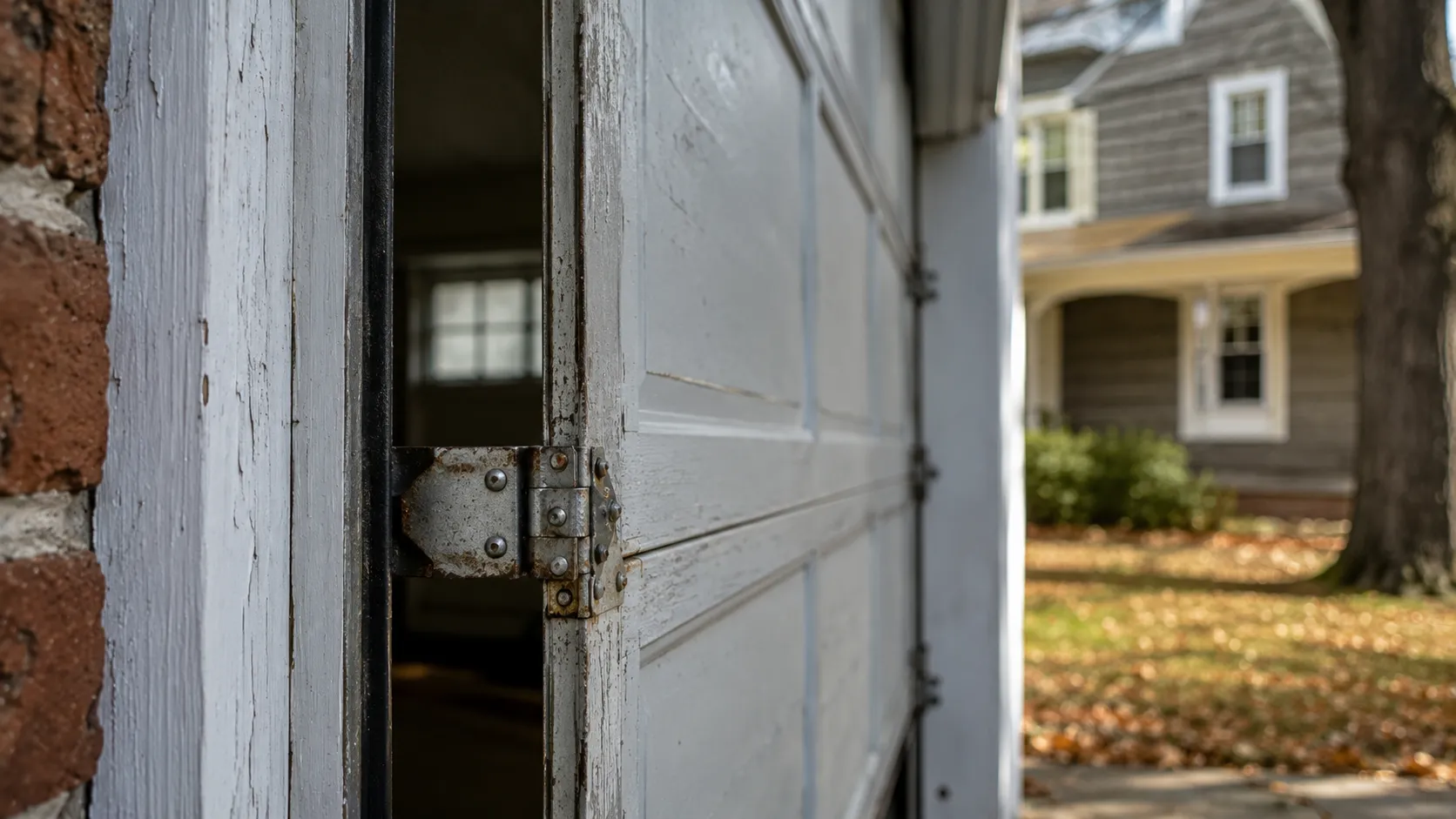
If a spring lets go on a cold morning and the door still closes and locks by hand, you don't need someone out that day. A broken spring means the opener will strain against full door weight, so leave the opener alone and work the door manually if you have to get a car out, but a day or two of waiting for a proper appointment costs you nothing except some heavy lifting. Livermore's mild winters mean you're not fighting snow load or ice on the track while you wait, which is a real advantage over harsher climates.
The only case where waiting isn't fine is a double-wide door with both springs down, or a door that's jammed halfway - at that point the cables or the track are usually carrying weight they weren't built for, and every day you leave it makes the fix bigger. Otherwise, a spring that broke overnight in the cold is a scheduling problem, not a crisis.
What we find
What to Look At First
Before you call anyone, look at the spring itself, not just whether the door moves. A torsion spring above the door should show a visible gap when it's broken - the coil separates cleanly, usually near the center. If the coils look intact but the door is heavy or crooked, the problem may be a cable off its drum instead, which is a different repair. Check the winding cones at each end of the spring for rust streaks running down the wall; on a house from the 1980s or 90s that's original hardware doing what forty years of moisture and temperature cycling does to unprotected steel.
Also check whether the door is single or double width - a double door usually runs one long spring or two, and if one has gone, the other is often close behind on the same cycle count. None of this requires tools, just a look and a flashlight. What it tells you is whether you're looking at a same-day spring swap or something that touches the cable and drum system too.
How we work
What Is Going On
A torsion spring is rated for a set number of open-close cycles before the steel fatigues and breaks, and cold makes that steel a little less elastic on the first few pulls of the day, which is enough to finish off a spring that was already near its limit. That's the mechanism, and it explains why failures cluster on cold mornings even in a place with a mild temperate climate like Livermore rather than somewhere with real winters. The bigger factor is age.
With most of the area's houses dating to the 1961-2010 window and heavy concentration in the 1980s and 90s, a large share of the springs still in service were sized and installed decades ago, often without ever being replaced. We don't stock every gauge and wind pattern that went into houses from that era, so on some jobs we're ordering the exact spring rather than swapping it same visit - that's a limitation worth knowing about before you assume next-day service on an older door. If your house falls in that build window and the spring hasn't been touched, cold weather isn't causing the problem so much as finding it.
Questions
Common questions
Why did my spring break on such a cold morning when it's usually fine here?
Livermore's winters are mild, but cold mornings still stiffen spring steel, and that's often the final push on a spring already worn down from years of cycling. It's less about the cold being severe and more about age meeting a stiffer moment.
Is it safe to open my garage door by hand after a spring breaks?
Yes, if the door still moves and locks. It will feel heavy since the spring isn't offsetting the door's weight anymore, but manual operation for a day or two while you schedule a repair is fine. Don't run the opener on it.
My house was built in the 1980s - does that matter for spring replacement?
It can. A lot of the housing stock here dates to that decade, and original springs from that era are sized for door weights and wind patterns that have changed since. We sometimes need to order the correct spring rather than swap it on the spot.
Do I need same-day service for a broken spring?
Not usually. If the door still closes and locks and only one spring on a double door has gone, waiting a couple of days for a scheduled visit is fine. Same-day matters more if both springs are down or the door is stuck.
Ready when you are
Need a garage door sorted in Livermore?
Livermore Garage Door Pros repairs and installs garage doors, springs and openers in Livermore, CA and the surrounding area.