
Guide
Why a Garage Door Goes Off Track
Livermore's 1980s-90s housing stock and mild climate shape why doors jump track. Local causes, what to check first, and when a call is worth it.
Local detail
What Local Conditions Do
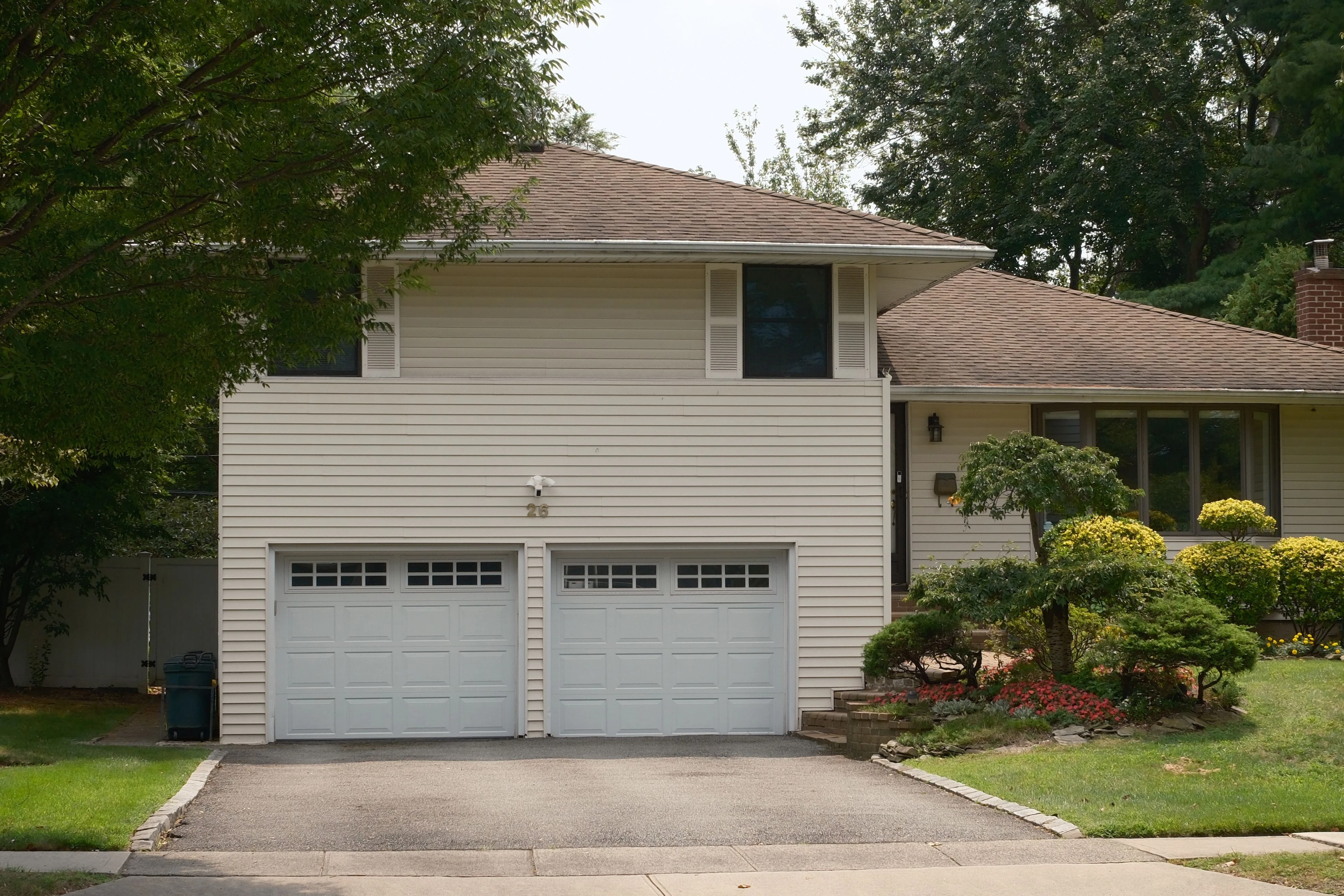
Most of the housing stock in this part of the valley went up between 1961 and 2010, with the median build year landing around 1981, and the bulk of it dating to the 1980s and 90s across the area's named neighborhoods. That matters for tracks because doors from that era were hung with steel roller brackets fastened to jamb framing that has had thirty-plus years to settle. A bracket that was flush in 1985 can be a sixteenth of an inch off plumb today, and that's enough for a roller to walk toward the edge of the track instead of riding center.
The climate here is mild temperate - no hard freeze-thaw cycle tearing at hardware the way it does in colder regions, but you still get daily swings between a cool morning and a hot afternoon. Steel track expands and contracts a small amount every day. On a bracket that's already a little loose from age, that daily flex is what finally lets a roller pop the lip of the track. It's rarely one dramatic event. It's thirty years of small movement finding the weak point.

The area
When Waiting Is Fine
If the door still opens and closes but you notice a slight wobble in one panel, or a roller that looks like it's riding a hair outside the track rail without actually jumping it, you don't need to treat that as an emergency. Snug the track bolts back to the framing if you can reach them safely, and watch it for a week. On homes built in the 1980s and 90s stock common through this area, loose bracket bolts are often the whole story - the wood behind them has shrunk slightly over the decades, and the fix is retightening, not replacement.
A door that's off track on only one side, still level, and not grinding metal-on-metal when it moves can usually wait a few days for a scheduled visit rather than a rush call. What can't wait is a door stuck halfway open, a track bent enough that you can see daylight between roller and rail, or a cable that's come off its drum. Those are load-bearing failures, not cosmetic ones, and the door can come down.
What we find
What to Look At First
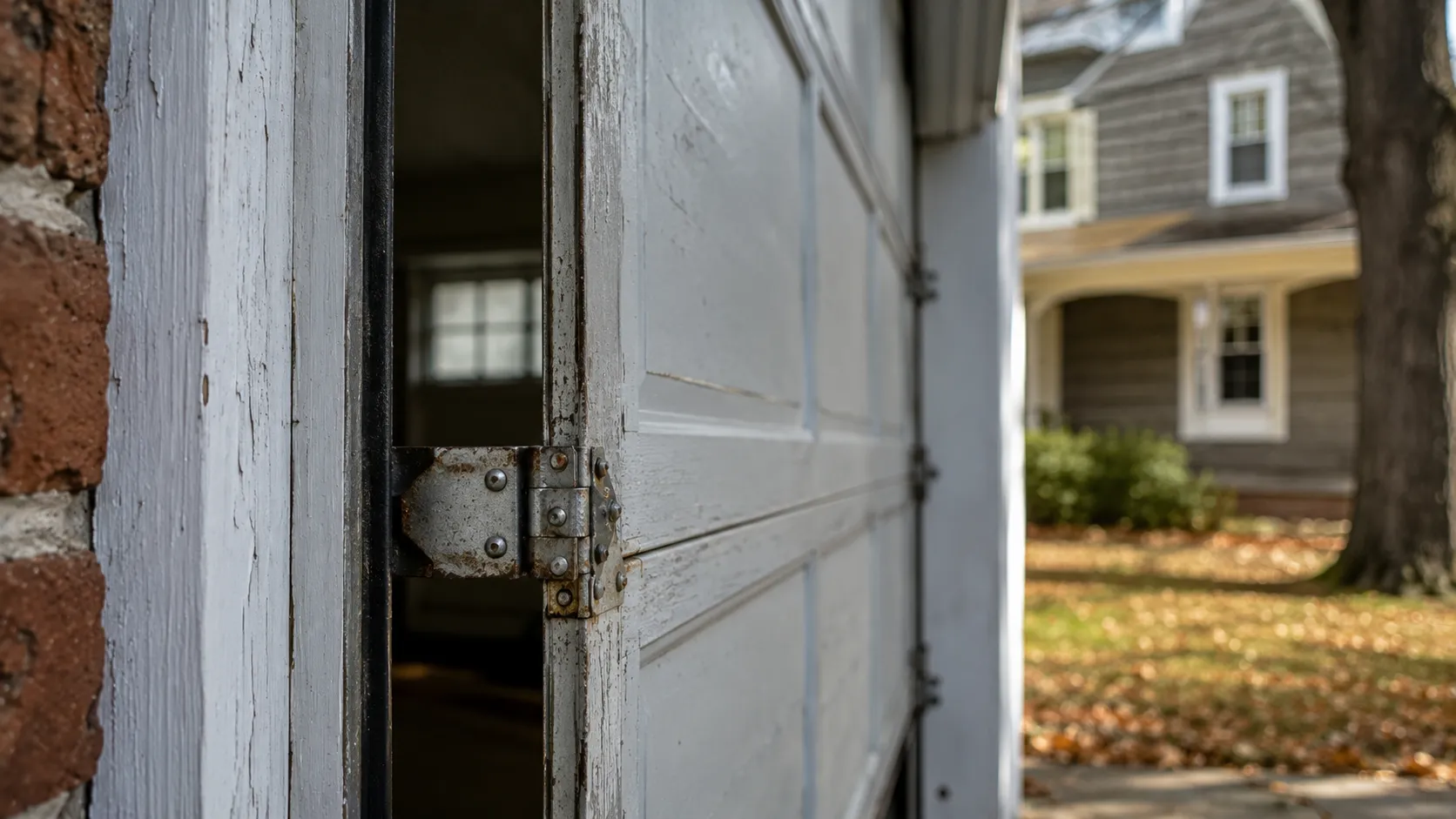
Start at the bottom bracket on each side, low enough that you can see it without a ladder. On the 1980s and 90s builds common here, that bracket is lag-bolted straight into the door jamb, and it's the first thing to work loose because it takes the full stop-and-start load every time the door runs. If those bolts spin freely instead of resisting, that's your track problem, not a spring problem.
Next, run your eye down the vertical track itself looking for a flare - a spot where the two rail flanges have spread apart or pinched together. That kind of damage almost always comes from something hitting the door from outside, a car bumper or a ladder, and it doesn't fix itself with a wrench. Last, check the horizontal track near the back, where it curves up toward the ceiling. Rollers that have been riding a little crooked for months tend to leave visible wear marks on the inside of the rail right at that curve, which tells you how long the misalignment has actually been building.
How we work
What Is Going On
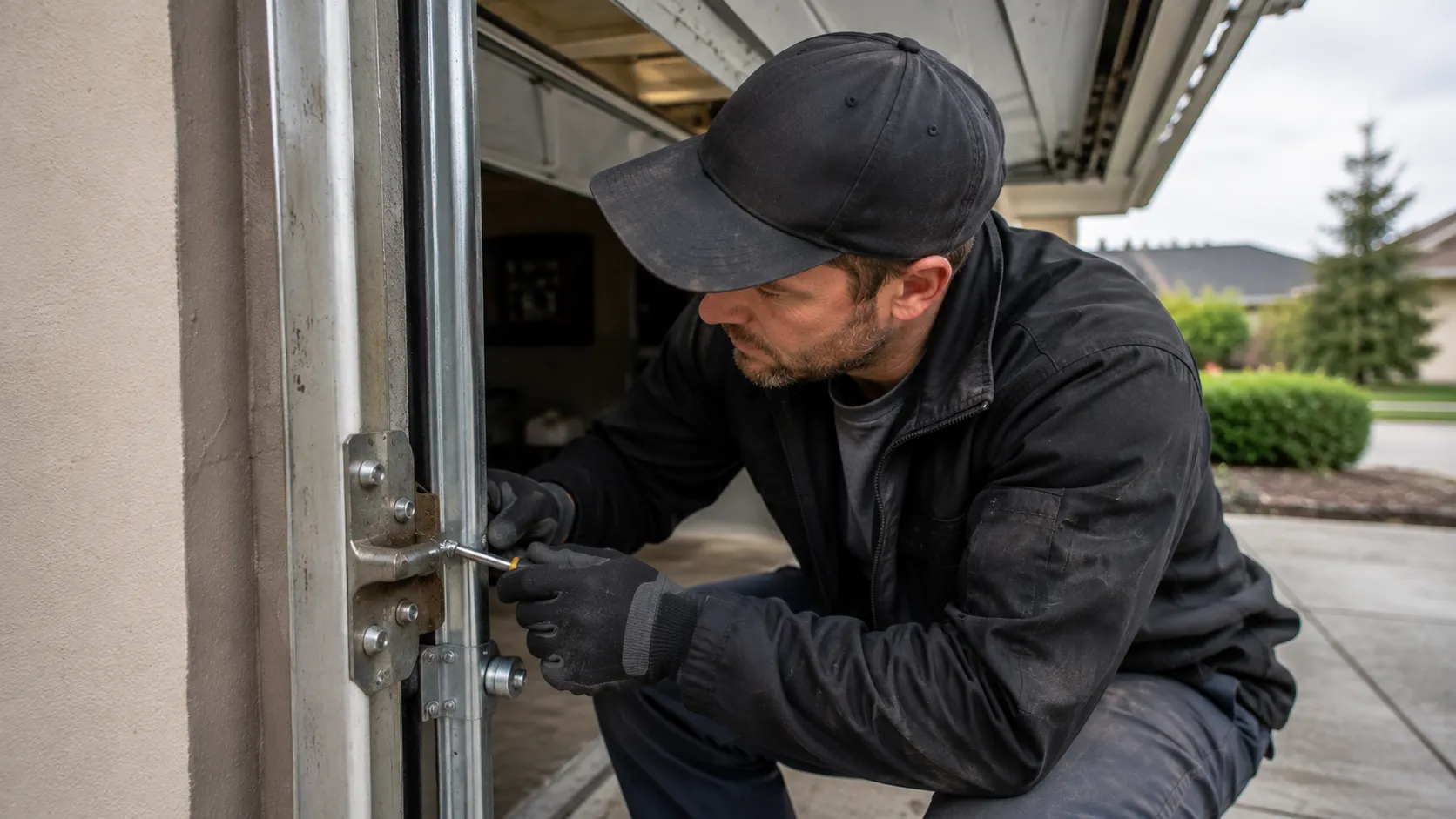
In houses from this build era, off-track problems trace to one of three things: bracket bolts that have worked loose in aging jamb wood, a rail that's been physically bent by an impact, or rollers that have simply worn down after decades of service and no longer fit the track profile they were sized for. The mild temperate climate here means we don't see the ice-jam failures that colder markets get, so when a Livermore door comes off track, it's almost always mechanical wear or an impact, not a weather event.
One honest limit: if the vertical track is bent more than about a quarter inch out of true, straightening it back into shape is a temporary fix at best. Steel that's been flared once flexes more easily the second time, and we'll tell you straight when a section needs replacing instead of bending it back - a repair that looks fine for a month and fails again isn't worth the truck run.
Questions
Common questions
Is a door off its track always a spring problem?
No. Springs lift the door; tracks guide it. A door can be off track with a perfectly good spring, and a broken spring can happen on a door that's still riding its track fine. On the older bracket-and-rail hardware common in this area, off-track issues usually start at loose bolts, not the spring system.
Can I push the door back onto the track myself?
If it's only off on one side and the door isn't under tension from an open position, you can sometimes guide a roller back in by hand with the door closed. If it's stuck halfway or the cable has slipped its drum, leave it - the door is under spring load and can drop.
Why does this happen more in older Livermore homes?
Houses built here in the 1980s and 90s have had thirty-plus years of jamb wood settling and daily temperature flex working on the same bracket bolts. That slow loosening, not any single event, is usually why a door that's run fine for years suddenly starts riding crooked.
Ready when you are
Need a garage door sorted in Livermore?
Livermore Garage Door Pros repairs and installs garage doors, springs and openers in Livermore, CA and the surrounding area.